Calvarium

This is a story about miracles.

It starts in December 2019, a few weeks before Christmas. I had just woken up from minor reconstructive surgery. I remember coming out of the anesthesia, hearing that everything had gone well, feeling relieved for about two seconds, and then immediately worrying about the routine scans I had undergone just two days prior. But I was too afraid to ask anyone if they knew anything, so I shuffled on home with my anxiety to wait.

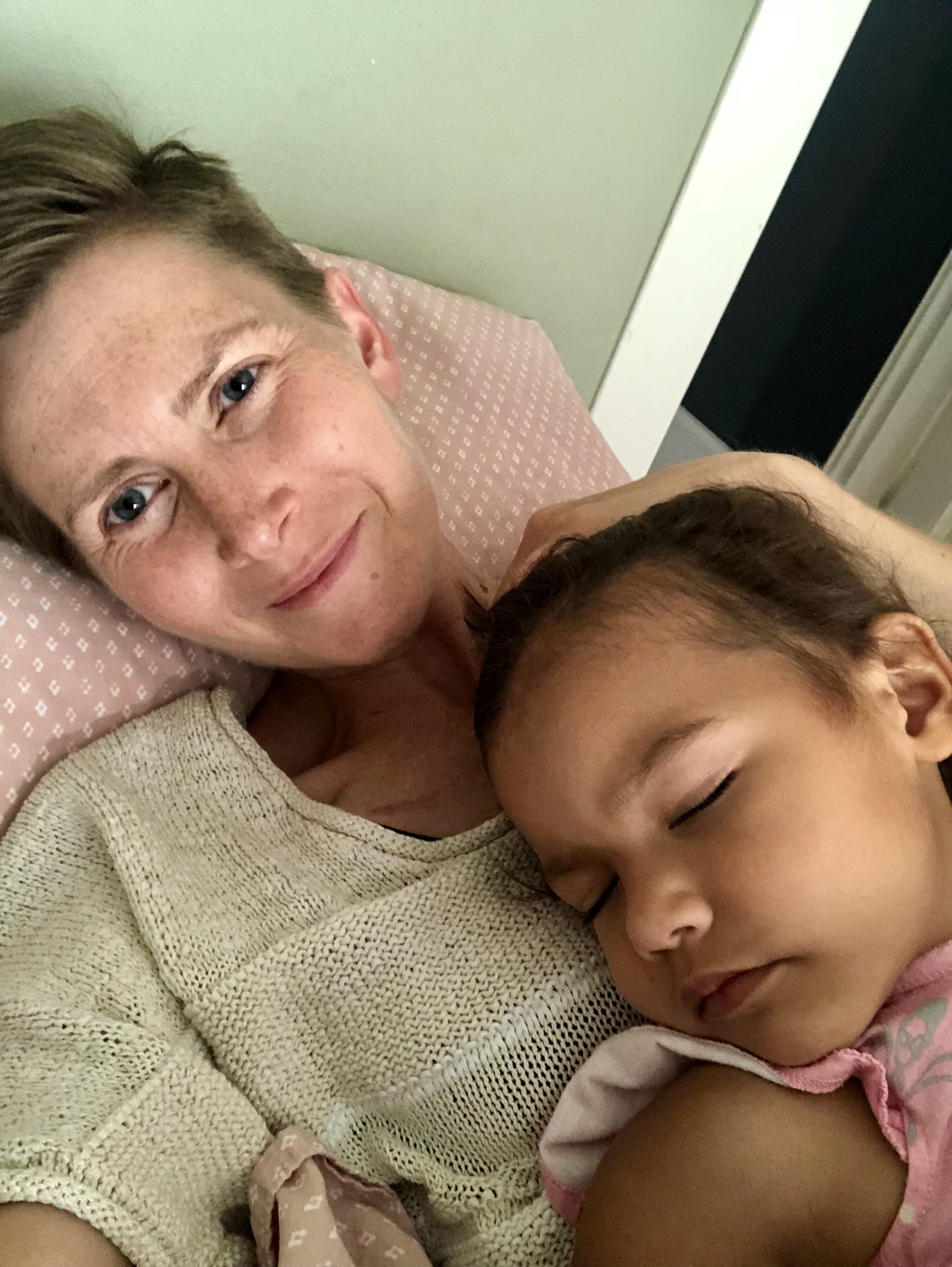
I received my scan results by email a couple of days later. I was recovering, relaxing on the couch as my daughter napped on my lap, when my phone pinged. My CT results were ready. I took a deep breath, nervously opened the report, willed myself to read the radiologist’s words: stable, no evidence of disease. 

Whew. 

An hour or so later, my bone scan results arrived in my inbox. I opened this document more confidently, sure it would be fine. Eagerly, I scanned the report, settling my eyes on the “findings” section at the bottom of the page:

New focus of activity within the right calvarium is suspicious for an osseous metastasis. 

Uhhhh…what? I’m pretty well versed in anatomy, but I had to look that one up. 

My skull. My fucking skull. Are you kidding me?

I was devastated. For two years, I had managed to outrun my cancer, but apparently it had caught up with me.

I saw my oncologist later that week to determine next steps. The spot was in a tricky area for a biopsy. Radiation might be an option, but we needed to confirm the cancer was really there; there was a chance it was nothing. We needed more imaging. I acquiesced to a brain MRI scheduled for the day after Christmas. That scan was inconclusive, as was the CT of my head that he ordered next. 

We decided to wait and watch. I would have a follow-up bone scan in April—if it was clear, we could call the results from December a false positive; chalk it up to operator error. 

The months went by. I turned 40. Mike and I took a much-needed vacation. Lucy rocked pre-K. 

We started to hear more and more about a novel coronavirus that was moving through the country. We shifted into remote working and learning while sheltering in place. Plans were canceled. Appointments were canceled. Everything slowed down.

Everything except cancer. 

April arrived, with its blue skies and puffy clouds. We celebrated Easter and welcomed the cleansing freshness of spring. I had my follow-up bone scan, hoping desperately for good news. But the scan was not clear. Not only was the spot still there, it was more prominent. I had another MRI, which now showed a faint correlation and all but confirmed the progression. 

More treatment would be in order.

My radiation oncologist went over the plan with me. Thirty-plus sessions of daily radiation to my skull. Skin damage. Permanent hair loss. Possible long-term damage to my brain tissue. My relief at having an “easy” (read: non-chemo) option wavered as we went through the side effects.

But, as I told you at the beginning, this is a story about miracles.

The slow pace of quarantine days had brought my family to a new level of presence. We were noticing the patterns of the birds outside our windows and marveling at ants going about their work in the driveway. We were watching plants grow, observing berries on the mountain ash deepen their shade of red, ever so subtly, from day to day. One morning we saw a coyote loping down our normally busy street. The world was…quiet. Soft and still, full of wonder, even as fear and sadness loomed. 

Our lives had become quiet, too. So much so that I was able to hear the small voice inside that gave me pause—a voice saying, “Maybe not. Maybe it doesn’t have to be so harsh.”

And then one morning, as I was meditating, I had a waking dream—a vision. In it, I found myself in a serenely beautiful forest glade. From my vantage point, I could see a distant, craggy mountain range, domed by blue sky and skirted by evergreens, embracing a tranquil alpine lake. Surrounding the lake’s sides was a group of leafy deciduous trees, filtering the clear, golden sunlight as it shone down. I felt completely content, at peace.

In an instant, it was all destroyed; a violent explosion ripped through the woods, leveling trees, scattering wildlife, leaving charred destruction in its wake. I winced in pain.

As the image faded and my meditation ended, I realized that this perfect place was inside of me; it was me. I recoiled in horror to think of destroying this divine home with a nuclear bomb of radiation. It seemed impossibly wrong.

The next day I had an appointment with my naturopath. We discussed the treatment plan. I mentioned that I had asked about other options, specifically proton therapy, but that my doctor didn’t think it would be significantly better—maybe saving a millimeter or two of healthy brain tissue. My naturopath didn’t hesitate: “I think you should at least have a consult. I care about those millimeters!” 

I’m not usually one for second opinions. I trust my care team, and I love the convenience of the cancer center close to my home. But this time I went for it. Maybe it was the dream. Maybe it was the intuitive nudge. In any case, it felt like the right thing to do. The referral process to get an appointment took a few weeks. In the past, the delay would have terrified me, but my path had already taken so many strange turns that I was more curious than afraid. I had a calm sense that things were working out as they should.

When I finally got to meet (virtually) with the new radiation oncologist, she told me that proton therapy was a possibility but confirmed it wouldn’t be much different from the standard option I was being offered at my home hospital. Side effects and efficacy would be similar. She was not sure about the degree of potential brain damage, though, so she offered to bring me in to run a comparative simulation. 

In fact, she had time later that day. 

Turns out, she was an angel.

When I met with her in person, before going in for the simulation, she told me she had been looking over my scans and believed there was a third option. She had colleagues who performed highly targeted, specialized radiation to sensitive areas. It was high-dose, curative, precise. Instead of 30+ daily sessions, I would be looking at only a few days of treatment. She wondered if I’d be interested in a consultation? There was compassion, kindness, and intensity in the way she spoke to me. I could read her eyes urging me to say yes.

Um…YES.

I had an appointment with the specialist shortly thereafter. With this type of radiation, known as Cyber Knife, I would likely experience hair loss, but it would be temporary. There was no risk of brain damage nor any long-term side effects. The course of treatment would last just five days.

It was an easy decision.

It took another month or so to work through records transfer and insurance approval and scheduling and more scans and simulations, but I was free of anxiety because I knew, with every cell in my body, that I had been guided to the right doctors and the right treatment.

There were also plenty of other things to worry about. It was now late July. We were in the throes of the pandemic. Protests for racial justice had broken out across the country. As a nation, we were deep in collective fear and suffering. The world was no longer quiet or still. It was angry, chaotic, shouting, burning. We had reached a breaking point, and we were breaking. The future was unclear. America’s disease, it seemed, had caught up with it, too.

I began treatment. The first one was not easy; strapped down to the table by a mesh hood that covered my face and held my head absolutely still, I felt panicky, claustrophobic, and intensely vulnerable. I had to will myself: relax, breathe, DO NOT rip this mask off your face and run away. I needed mild sedation to get through the remaining four sessions. 

And then I was done. Nine months and a lifetime since it all began, and over just like that.

My hair started to fall out a few weeks later—triggering some PTSD from my early chemo days and leaving me with nearly half my head bald. I got used to wearing hats. I inspected my scalp daily for stubble. After about two months, I could see a faint shadow darkening the large, pale swath of my head.

On November 2, the day before the election, I received welcome news: my latest scans show that the radiation was effective. My cancer is quiet, healing.

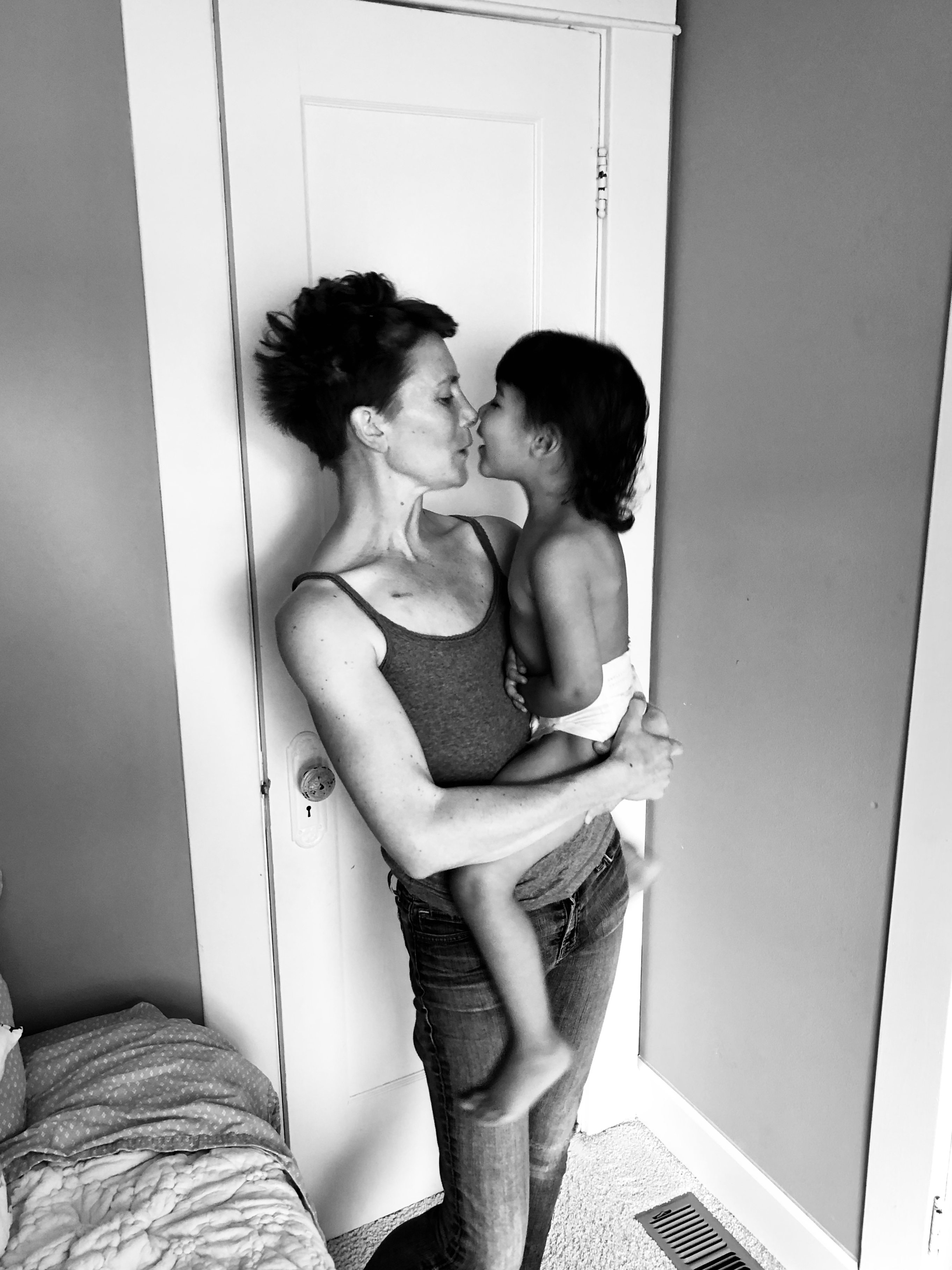
My hair is coming in strong now, growing every day. I have a thick patch of fuzz. I like the way it feels. My husband and daughter drop kisses there often. 

Every day I look in the mirror and am reminded of my miracle.

Every day, I see that I was guided to just what I needed.

Every day, I see my capacity for growth and transformation.

Every day, I see that I am safe, that I can trust, that I don’t have to be afraid.

I don’t have to be afraid.

I see it, and I know it.

This is a story about miracles.

A way to begin

There is no protocol.

Racism is a cancer: this metaphor has come up repeatedly in the anti-racist reading I have done this summer, and it’s one that my husband and I have discussed often at home, even before George Floyd’s murder and the ensuing protests. (In a way, it’s a metaphor that saved our marriage, but that’s a story for another time.)

I am a white woman who lives with metastatic cancer and with internalized racism, so I’m drawn to the parallel. I want to explore the experience of coming to terms with both—especially since our current president has declared that it is anti-racist education that is actually the “sickness” in this country. (Spoiler alert: I disagree.)

To begin, let’s consider the onset. Both cancer and racism can go undetected for years. You may not feel sick, and it’s not your fault that you are. Hearing the words, “It’s cancer” can bring forth a surge of heavy emotions—or leave you feeling numb. Having someone call you out for doing or saying something racist can come as a big shock, too. I know, because I’ve been told both.

So you get a diagnosis. What do you do next? Do you ignore it? Deny it? Get angry? Cry? You probably do, at first. You might proclaim, “I’ve done nothing wrong!” or, “I did everything I thought I was supposed to do!” You might question, “What did I do to deserve this?” or, ”Why do I have to deal with this?” All valid feelings. But eventually, you will have to do something, because the disease is not going away on its own. Left unchecked, cancers spread and become deadly.

Fortunately, there are many resources available. You might start by seeking out expert opinions. Maybe you do some reading and research. Maybe you talk with people who have first-hand experience of what you are now facing. (Please be considerate, though, because these conversations can trigger real trauma.)

Once you’ve acknowledged your disease and done some learning, you will probably feel a little more confident about moving forward. Maybe you even start to feel hopeful. You probably still feel scared and angry and sad and confused and hurt and a little ashamed or guilty, but there’s hope, too, and curiosity. At least, that’s how it was for me. It’s all part of the process.

Next, in the cancer world, you and your healthcare team come up with a treatment plan designed to target the visible tumors and eliminate any microscopic cancer cells floating around inside your body. Likewise, when dealing with racism, you and your newly educated self start by calling out racist damage wherever you find it—or at least proactively considering the racist impact that your own words and actions could have.

You continue with your protocol for several months. The side effects might be awful, but you press on, because you know the discomfort is normal and necessary. Then, best case scenario, your scans are clear—you have no evidence of disease. If you have been actively learning about and identifying racism, you might believe you don’t have any of that left in you, either. You think, “Wow, that was really hard, but I did it. I got through it, and I’m better for it. I have a new outlook on life. I’m grateful. I’m ready to take on the world!” You might feel proud and happy, maybe even excited. Again, valid feelings.

And yet. You find that you have some nagging worry. Perhaps a faint doubt or a troubling sense of unease: Is it really gone? What if it comes back? And even if I no longer have to personally deal with it, are others still suffering? Are people continuing to die because of it? How do I feel about that? Do I care?

Chances are, you will care.

So you look for ways to alleviate your concerns. You search for guidance and inspiration, seeking out leaders, activists, and different voices. Maybe you donate your time or money to organizations that are working to eradicate the disease and support those most affected by it. Maybe you work to raise funds or awareness. You put all of your energy into fighting the disease. You do a lot of good.

It never feels like enough, though.

And one day, you realize with dismay that you have been acting out of fear this whole time. You have been resisting and suppressing your disease. Running from it, breathless, hoping it doesn’t catch up with you. You wrestle with the idea that you might never be able to get away from the disease. It’s always there, whether you see it or not. This new awareness causes a great deal of stress and anxiety, because it is rife with uncertainty and a lack of control. You don’t know what to do, because there is no protocol for this part.

So you stop running. And you get brave, and you turn around. 

What you see surprises you. Where before there was fear, now there is love. Where before there was self-preservation, now there is compassion. Where before there was resistance, now there is acceptance. And you understand that instead of suppressing your disease, perhaps you can transform it.

You begin to see your disease as a symptom of something much bigger than poor luck or unfortunate circumstances. Maybe this illness is not so much an individual problem as it is a societal issue. Maybe our environment is sick. Maybe our systems are sick. Maybe our policies are sick. Maybe the people in power suspect—or even know—that these factors are making us sick, but they benefit too much to do anything about it.

Maybe if we acknowledge that we are all sick because our whole structure is sick, and we demand change and we hold our leaders accountable, we can begin to get better. 

We cannot undo the past, but we can move forward differently. 

We can go in love, rather than in fear.

Racism, like cancer, is complex in its origins, pathways, mechanisms, and manifestations. Racism, like cancer, has a way of hiding, growing, recurring, and metastasizing without our being fully aware of what’s happening. Racism, like cancer, is the sickness, and right now our entire country is grappling with metastatic disease. There is no protocol, no cure. But we can move forward and heal anyway. We can get better and do better anyway. Anti-racist work, like anti-cancer work, is a way to begin. 

I am no longer afraid of facing either my cancer or my racism, nor of getting it wrong. There is no protocol, and I cannot control the outcomes. What I can do is learn, listen, think, consider, feel, try, mess up, have setbacks, learn something new, listen harder—hear, think some more, reconsider, feel differently, and try again. 

There is no protocol. But I love myself, my fellow humans, and the promise of this democracy enough to face my disease anyway—trusting that doing so enables me to get better and to do better, too.

Making space

My heart is breaking into a million pieces.

One week ago, my family was dealt a tremendous loss. My cousin Petey was the best. So loving and very loved. Hilarious and fun. Compassionate. Earnest. Protective. He was so full of life that he sparkled.

I learned in May that he had been diagnosed with cancer. Four months later, he was gone. He was only 40.

My grief is heavy, and feeling the pain of those closest to him and witnessing the outpouring of love, shock, and support from his friends and family compounds it a thousand times over.

I miss him terribly.

And then I wake up to the anguish of a community mourning the unexpected loss of a real-life superhero to cancer.

And then there’s my own cancer.

And the pandemic.

And Black people getting shot in the back. And in bed. And in cars. And on the street.

And so much fear and hate and staggering hypocrisy.

But also my baby niece was born.

And my own child overflows with health and happiness.

And my marriage is solid after coming close to collapse.

And there’s a movement for justice that is happening and will not be stopped.

And the sun shines and the birds sing and the flowers bloom.

How are we supposed to hold space for all of this? It takes my breath away. I feel raw and exposed, by turns giddy and depressed. I cry often, simply from the overwhelming crush of what it is to be alive right now.

I also feel strangely free, untethered from the limitations of my physical body and cut loose from certainty of what’s good and what’s bad. My rigid expectations of how life is supposed to go are fading. I am unconcerned with other people’s judgments and no longer interested in making many of my own.

I have so much inside of me. Every one of us does. Oceans of pain, joy, suffering, hope, frustration, creativity, darkness, humor, fear, LOVE. Our experiences are unique, but we share in our humanity, in our capacity for big emotions, for resilience, for growth, for curiosity, for transformation. For giving and receiving help. For connection. For empathy.

We have the ability to see each other–and to see ourselves in one another.

I’m done being afraid of who I am. Done pretending to be small. I’m done with being “fine.” I just don’t think I have room for it any more.

I’ve decided that I’m going to let my ocean spill out in waves–the pain, the joy, the suffering, the hope, the frustration, the creativity, the darkness, the humor, the fear, the love. The struggles and the triumphs. The humanity, all of it. Because it’s what’s real in a world of mirages.

I’m going to let my humanity shine, and I promise to honor yours, too. Maybe it’s the way forward–to see and be seen as we are, as human beings who are doing the best we can to navigate the waves of our oceans.

My heart is breaking. But in breaking, it is also expanding.

I am making space for it all.

Floating

Several months ago, I quietly celebrated the two-year mark since my metastatic breast cancer diagnosis. I didn’t do anything special, just prepared myself for the waves of emotions and allowed myself to feel them. Allowed myself to feel tremendous gratitude for how far I have come and where I am now. Acknowledged the hard work I have done, as well as all that I have left to do. Remembered how very lucky I am.

Allowed myself to think back to that day, the day I got the call. Allowed myself to grieve.

July 29, 2017, marked the beginning of a new way of life. A shift, a breakdown, an awakening. It was 8:30 a.m., on a Friday. Mike was home, had taken the day off because we had plans to head out to the beach house for the Mettler Classic, our annual family golf tournament and gathering, named for my grandmother, who loved a good party. Lucy lay asleep in bed between us. I was awake, expecting the call. 

I’d had a biopsy of a 1.4 cm lesion on my right hip bone earlier in the week, and I was waiting for my oncologist to deliver the results. Several weeks prior, I’d asked for a bone scan because of an odd discomfort in my leg and an unsettling feeling in my gut. I’d been responding well to chemo, the tumor in my breast had shrunk significantly, and I had surgery and radiation scheduled. I was in the home stretch of my treatment. But something didn’t feel right, and so I asked for the scan. I figured if it was clear, it would alleviate my anxiety and help me finish strong. I could get through my last couple of infusions and focus on getting well. I wanted to put my fears to rest.

But the bone scan was not clear. So my doctor ordered a PET scan and a biopsy, and here we were, waiting for the results, hoping, expecting, even, that they would be negative, that the blip was some old injury or a cyst or something that had been there for years. The PET scan showed low metabolic activity in the hip lesion and no additional areas of concern: great news. So we were just waiting on the results of the biopsy.

My phone rang on my bedside table, and I picked it up.

“Good morning, Dr. Kundra, how are you?”

“I’m good, I’m good. So the biopsy…it came back positive, actually.”

“Oh.”

Not good, not good, not good. Panic setting in, heart racing, eyes welling up. What does this mean? I know what it means. A nightmare. Metastasis. Stage 4 cancer. I’m going to die. I have to be on chemo for whatever is left of my forever. I’m never getting my port out. I’ll never be well again. What about my family? What about Lucy? I’ve let everyone down. I’m so sad and so ashamed and so disappointed. And so scared. Oh, my God. 

And then, emptiness.

My doctor rattled off some more information, used words I couldn’t process, asked if I had questions.

“Not right now,” I answered.

I hung up. Let it sink in, head down. Breathe. “It’s cancer,” I told Mike. Lucy snoozed away, sprawled out across the bed. My precious, barely two-year-old, girl. What would become of her childhood?

“Huh.” And he held me, hugged me, let me cry.

I got up, called my mom. Asked her to please let my dad and sisters know, because I couldn’t. Cried some more.

We decided not to go to the beach. I didn’t think I could handle being around so many people, not with this huge unknown hanging over me. I didn’t want to talk about it, didn’t want to darken the weekend of fun. I wanted to stay home, where I felt safe.

Mike got up and went to the store. He came home, inexplicably, with a dozen doughnuts, something we never have. Fuck it, I thought, and ate one. Let Lucy have one all to herself. What difference would it make?

Somehow we got through that day, and the next. Mike and I went to a baseball game that Sunday. The Mariners were playing the New York Mets, and I commented on the strange coincidence of that matchup…my home team battling the Mets while I took on my own personal mets. I took it as a good sign that my boys won that game. Glimmers of humor, of hope, beginning to shine through cracks in the walls of my fear.

In the weeks and months that followed, I researched, read, learned, talked, planned, and moved forward. I advocated for myself. I convinced my doctors to proceed with my full treatment protocol, including surgery, radiation, and reconstruction. I implemented a number of complementary therapies to support my overall health. Somewhere along the way, I found hope again. And, unexpectedly, I began to feel excited and happy and even grateful for the position I was in and the path ahead. I began to believe that I was going to live.

And day by day, I did, and I am. Alive. Living. Some days I barely survive, others I thrive. It’s okay. I struggle with fear. A lot. It makes me anxious and impatient and short-tempered. Sometimes I feel depressed, sometimes I feel explosively angry. Sometimes I feel isolated and so alone. Sometimes the fear makes me lash out at the people I love most. I make a lot of mistakes. But I have a lot of help, and the fear fades. I reflect. I learn. I apologize. I talk about it. I reconnect with my people. And I have moments of utter peace, of complete contentment, of deep joy and wonder for my miraculous life. 

I am learning that these big emotions come and go, that we have an unlimited number of chances to pick ourselves up and forgive ourselves and try again. That the people who matter will love us, even through our lowest, most vulnerable moments. That I deserve that love and that I can give that love to myself, too. I guess that’s resilience, though it feels much more awkward in real life, in the thick of it, than it does when you read some sparkly inspirational quote about never giving up.

Lucy swim

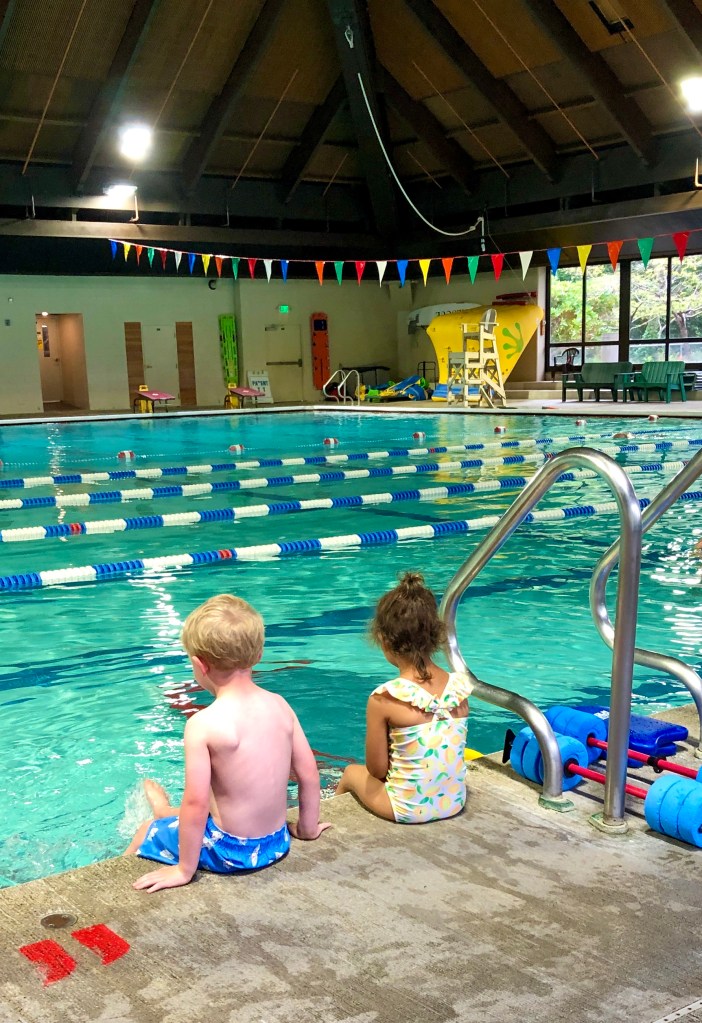
I was watching Lucy at her swim lessons last week, noticing how she goes rigid when she’s practicing her floats, even though her teacher tells her to relax. Sometimes she panics, kicking and splashing, trying desperately to keep her head above water, forgetting that she’s held, that she’s completely safe. It strikes me how like life her practice is. The more we try to tighten, grasp, and control, the more afraid and anxious we become, and the harder it is to find peace; we sink. But when we relax and trust—even thought we may be scared—we find ourselves carried, cradled by the currents of the universe, by God, by whatever it is that supports us and keeps us afloat. 

I’m practicing too, at this very moment, as I heal from my most recent surgery and await my latest scan results. Although I’ve enjoyed good health and no evidence of disease for nearly two years now, I still find myself grappling with fear, with the unknown, with the “what-ifs.” I’m fighting to keep my own head up when deep down I know that I’m protected, buoyed, and propelled by love, hope, and faith.

There is so much beautiful uncertainty in life, and our landscapes are always changing. Maybe the trick is to get comfortable with that truth, to find freedom in it, to let go and float.

What it would repair

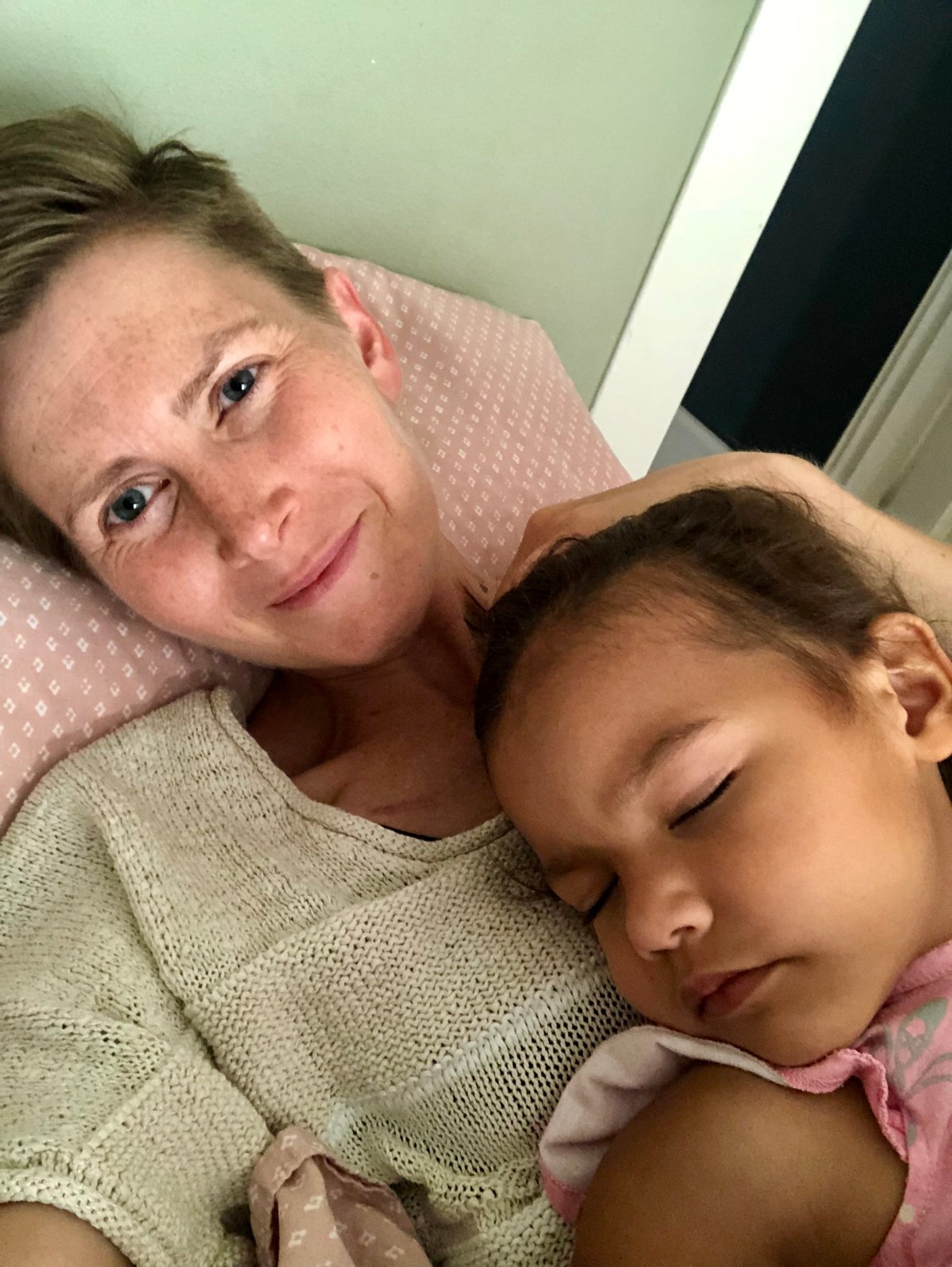
About a week ago, Lucy fell asleep with her head on my chest for the first time in nearly a year. I lay there in her little bed, holding her as the old lullabies played, and I cried. I cried with grief and relief and joy, all at the same time. Such a simple moment, but something I have missed so much.

From minutes after she was born, Lucy found the ultimate comfort nestled against my chest, falling asleep there, often sneaking her hand down my shirt to feel the soft warmth of my skin. And I found my way as mother with her at my breast, nursing her on demand for 20 precious months and cradling her against my heart day and night. Cancer ripped that comfort and closeness away from both of us, first when I had to wean her before starting chemotherapy and then again when I underwent a mastectomy to remove as much of my remaining and potentially treacherous breast tissue as possible.

That loss, the premature severance of a physical bond between mother and child, has been the hardest and most painful part of this entire experience. It is the part that makes me cry when I think back over the last year and half. It is the part that feels unfair. It is the part that–I’m ashamed to admit this–brings envy every time I see a pregnant or nursing mother. I am beyond (beyond!) grateful for the months I had with Lucy when she was an infant, and I love her even more now, if that’s possible. Feeling strong and healthy and happy enough to truly enjoy this present time with her is the biggest blessing.

But still. I grieve the loss. It was unexpected and traumatic and it sucked.

My mastectomy was in September of 2017, and the post-op healing process took several weeks. When I was finally able to hold Lucy again, she struggled to be comfortable. Where there had been softness, a natural pillow, there was now barely more than bone covered by a thin layer of skin. She would turn her head this way and that and squirm, never complaining, but not content. I would lie with her at night to help her fall asleep, and she would lie on top of me, wriggling around until she found a soft spot on my belly on which to rest her head. We got used to it, but it always felt a little awkward and sad.

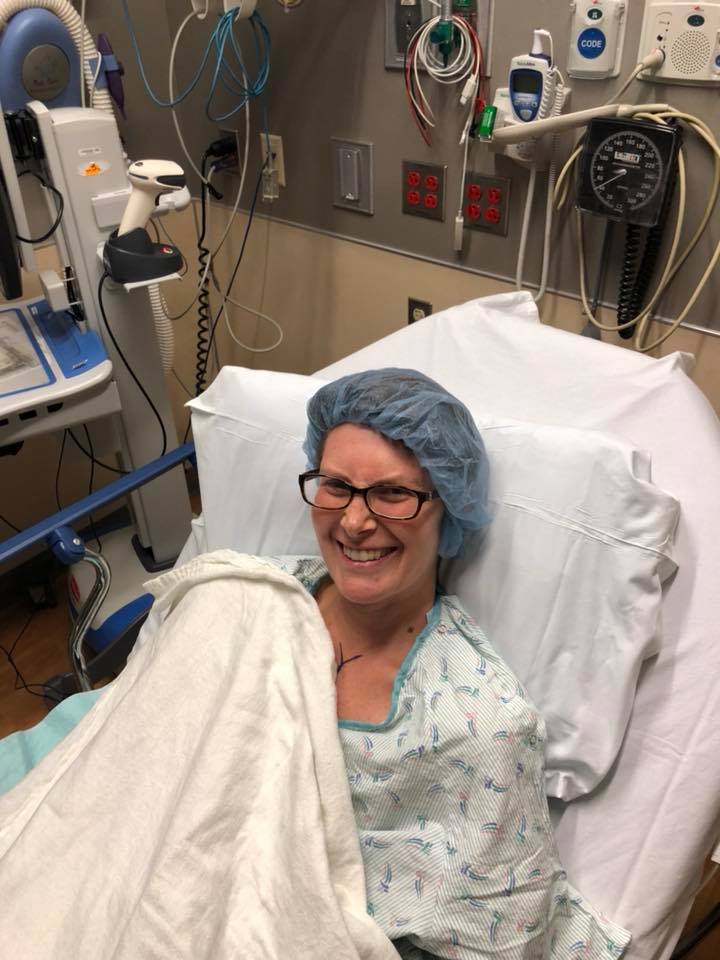
Six weeks ago, I had reconstructive breast surgery. My husband posted a goofy photo to Facebook: me, drugged up, in surgical gown and cap, with a caption about celebration and #tatas. We may think of plastic surgery as a casual choice, even a vanity. Maybe we joke about enhancements and touchups. And while there was certainly a welcome element of that lightheartedness and humor going into my surgery, it was tempered by the gravity of why it was happening and the hope of what it would repair.

I was in the operating room for nearly 12 hours and in recovery for three additional days–by far the longest hospital stay I have ever had. I now have a slash across my abdomen that stretches from hip to hip. This is where the surgeons harvested skin, fat, and blood vessels with which to build new breasts. I have oval-shaped scars outlining my new “girls,” scars from tape blisters, scars from various drains, wires, and tubes. After surgery, I couldn’t stand up straight, raise my arms, or lift, push, or pull anything more than 10 pounds for weeks. Everything hurt.

You might be thinking, “All that for new boobs? Sheesh.”

I get that.

But now clothes fit the way they should, and I feel more confident in the way I present myself to the outside world. When I look in the mirror, I no longer see cancer. I see scars and strength and beauty. And Lucy once again has a place to rest her head. That is what I wanted most of all.

She’s getting so big. And that’s awesome because every day she grows is a day I get to experience and appreciate. But I also want to hold my baby close a little longer, before she’s all grown up and I’m out of chances.

And now I can.

fullsizeoutput_16af
The day before my breast reconstruction.

36620565_10212578376036530_4520587417027084288_n
Ready for the OR.

IMG_7694
Six weeks post-op, feeling whole again.


The sweetest moments

First off, thank you. It can be scary to put yourself out there, even if only to friends and loved ones. I am working on being more vulnerable, more courageous, more open, and sharing my writing was a big step for me. Having you dear people respond to my efforts with love and kindness is a gift. So thank you, again and again.

I have come to deeply appreciate the notion of change, the promise that nothing we experience or feel is permanent. There is peace in realizing and accepting this truth. It is reassuring to know that the bad will pass, and it is comforting to know that the good will come again. This idea may be cliche–you know, nothing lasts forever–but the clarity of the concept is new to me and has brought about a much-needed sense of well-being.

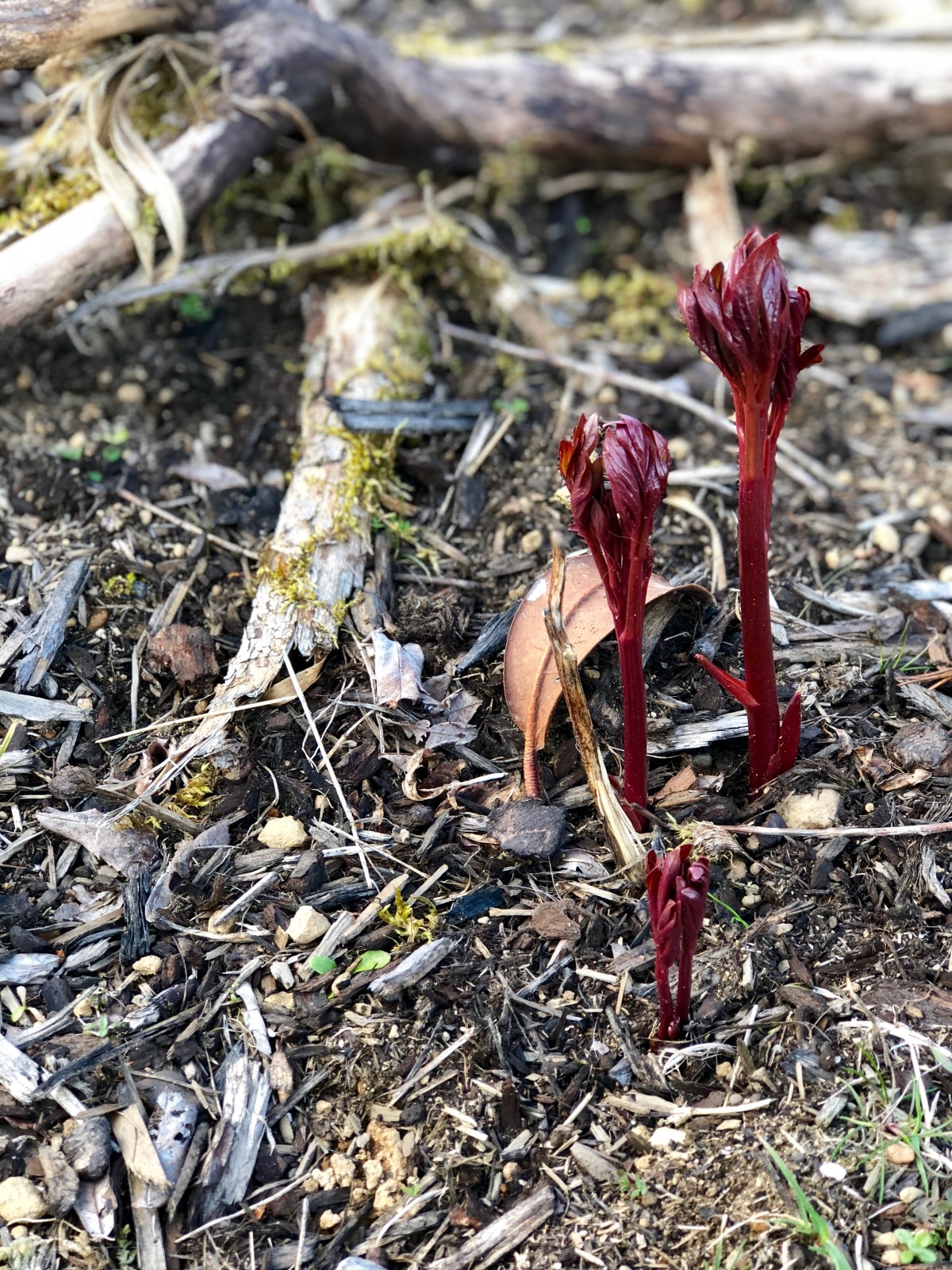
I have always found the period of change from one season to the next to be particularly magical. I guess that’s because it’s easy to see the transformation during the in-between times, before the freshness wears off and we become accustomed to the feel of the days. There is new energy, shifting light, a difference in the way the air feels and smells. Now that it’s spring, Lucy and I go out into the yard every day to see what’s changing. I don’t know that I’ve ever been so giddy over each new sprout, bud, and bloom, so mesmerized by the movements of birds and snails and ladybugs.

I savor the change in my own awareness, too. The simplest experiences have become the sweetest moments. During treatment, I hated the sensation of the shower on my bald head; now, I love washing my hair, feeling it grow longer every week. During treatment, I was sensitive to the sun and could barely go outside without covering up in hats, sunglasses, long sleeves and SPF 50; now, I rejoice in the warm touch of sunshine on my skin. During treatment, I was restless at night and woke each morning thinking, “I have cancer. Shit. Shitshitshitshitshit;” now, I sleep soundly. And I wake up to snuggles with Lucy and excitement for each new day. I love feeling healthy and strong, free of pain and nausea, calm and content. I realize that I wouldn’t know how good all this feels if I didn’t have the darker days of treatment for reference–and I find myself thankful for everything I have been through.

Often, when people hear my cancer story, they tell me, “But you’re so young!” Too young for serious illness, too young to be thinking about mortality. But we all know this disease doesn’t discriminate. And really, there is an upside to being diagnosed at a relatively early age: I get to move forward in life with a changed perspective, with gratitude for every single today and the small beauties each one brings. I like myself better than I did before cancer. I have more patience. I judge less. I don’t worry about much anymore. I am happier. How strange that something life-threatening should give me such freedom to live.

♥♥♥

In celebration of change, here are two recipes that transform vegetables I consider rather dull–radishes and beets–into something I am excited to eat. Roasting the radishes mellows out their spiciness, and pickling the beets cuts through some of their earthy sweetness. These are very loose recipes, which is how I like best to cook. You can adjust the quantities of the ingredients to your liking.


Roasted Radishes
adapted from thekitchn.com

Ingredients:

Radishes, trimmed and washed
Olive oil or avocado oil
Sea salt
Lime wedges and chopped cilantro for garnish (optional)

Directions:

Preheat oven to 425°. Cut radishes in half crosswise. Toss radishes with oil and salt to taste. Place radishes cut-side down in a cast-iron skillet or other heavy baking sheet or pan. Roast for 10-15 minutes, until the white parts of the radishes start to turn brown and the skins begin to wrinkle. Toss with a little more salt, a squeeze of lime juice, and a sprinkle of chopped cilantro.

Pickled Beets
inspired by my dad, who has always been a big fan of beets

Ingredients:

Cooked beets, peeled and sliced into 1/4-inch rounds
Vinegar (I like white, red wine, or apple cider vinegar)
Water
Garlic gloves, crushed
Herbs and spices to taste (I like dill weed and mustard seed)
Salt to taste

Directions:

Mix together equal parts vinegar and water, enough to cover your beets, in a bowl or large, wide-mouthed canning jar. Add a couple of cloves of crushed garlic, along with whatever herbs and spices you like and a couple of pinches of salt. Stir well to dissolve the salt. Add the sliced beets to this mixture, cover tightly, and store in the refrigerator.

Signs of life

I have never wanted anything so badly.

The days leading up to the meeting with my oncologist, to the appointment where I would find out whether or not all of my treatments had worked, were fraught with a weirdly anxious excitement. I was hopeful. I expected to hear good news. But I was afraid, too. My husband was nervous. Our families and friends were encouraging and optimistic, but I know they were worried. So much hinging on this brief visit.

Waiting for the doctor was torture. My pulse and blood pressure were wildly elevated. I stared at the scuffed tile floor, hands clasped, tapping the toes of my boots back and forth. I had received a lot of bad news in rooms like that over the past fourteen months. Mike rubbed my back with one hand, pulled at his hair with the other. As the minutes ticked by, I started to really worry. Surely, if everything were fine, he’d be in here by now? And then, footsteps, a knock, and it was time.

A curt greeting, a half smile, then,”Your blood pressure spiked. What’s going on?” A joke. Was that a joke? Ohmygodohmygod please just tell me I’m okay. “Your CT scan, it looks okay.” I didn’t say anything. My expression must have been disbelieving. He handed me the report. “Look at it. It’s okay.”

Sheer relief, a flood of it. Tears. Laughter. “Really? It’s okay? Really?” I took the report, read the words: no convincing pulmonary metastases, no abdominal or pelvic metastases. Just some radiation-related inflammatory changes in my lungs and a hairline fracture in my hip bone. No cancer. No cancer. Stage 4, no evidence of disease. The best we could have hoped for.

I hugged my doctor, kissed Mike, sent the text to my family: “ALL CLEAR!!!!” We discussed next steps. I will finish my year of Herceptin infusions (only two more to go!) I will stay on the estrogen-blocking pill, Tamoxifen, indefinitely. I will get my port removed. I will have reconstructive surgery. I will have another scan in six months. I will be vigilant of symptoms of recurrence. I will look after my whole self, body, mind, and spirit.

I floated out of the room, feeling released and rinsed clean. For the first time in over a year, I could breathe, fully and deeply, without feeling the constriction of anxiety across my chest. I was euphoric. And very tired.

I know there is a chance my cancer will return some day. But there is also a chance it won’t. Having this opportunity to reset has given me a tremendous boost of hope, confidence, and purpose. I am eager to move forward, to live with awareness and courage and gratitude. Spring is here. The garden is waking up. Signs of life are everywhere, within and around me. I can think and act with new clarity. I can remember life before cancer without regret. I dare to be excited to see my baby girl grow up. I have been so afraid of missing that.

I am also yearning to tell my story. This experience is life-changing, and it can feel very lonely. I am luckier than many; I have support, insurance, education, and privilege. But I am no more deserving of health, happiness, and well-being than anyone else. If I can offer hope and encouragement to someone who needs it, that would well be worth the discomfort of vulnerability that comes from sharing something so personal.

Life is funny; I am frequently tickled by its uncanny quirks and coincidences. Cancer was certainly not on my radar when I came up with the title for this blog. I chose it because I liked the ring it had and because prunes and pears were two of of my daughter’s favorite foods. I still like the sound of the alliteration, and Lucy still likes prunes and pears, but now I also connect those words to growth and healing. Pruning a rosebush of diseased or unproductive branches redirects energy towards buds and new growth. Paring a vegetable removes the dull, tough outer skin, revealing something vibrant, tender, and full of vitality. I feel as though I have been pruned and pared, my sickness and fear cut away, my energy redirected toward something much more positive. I can feel it happening, in a tingly, magical way. I am ready to heal, from the inside out. I am ready to grow and bloom and shine.

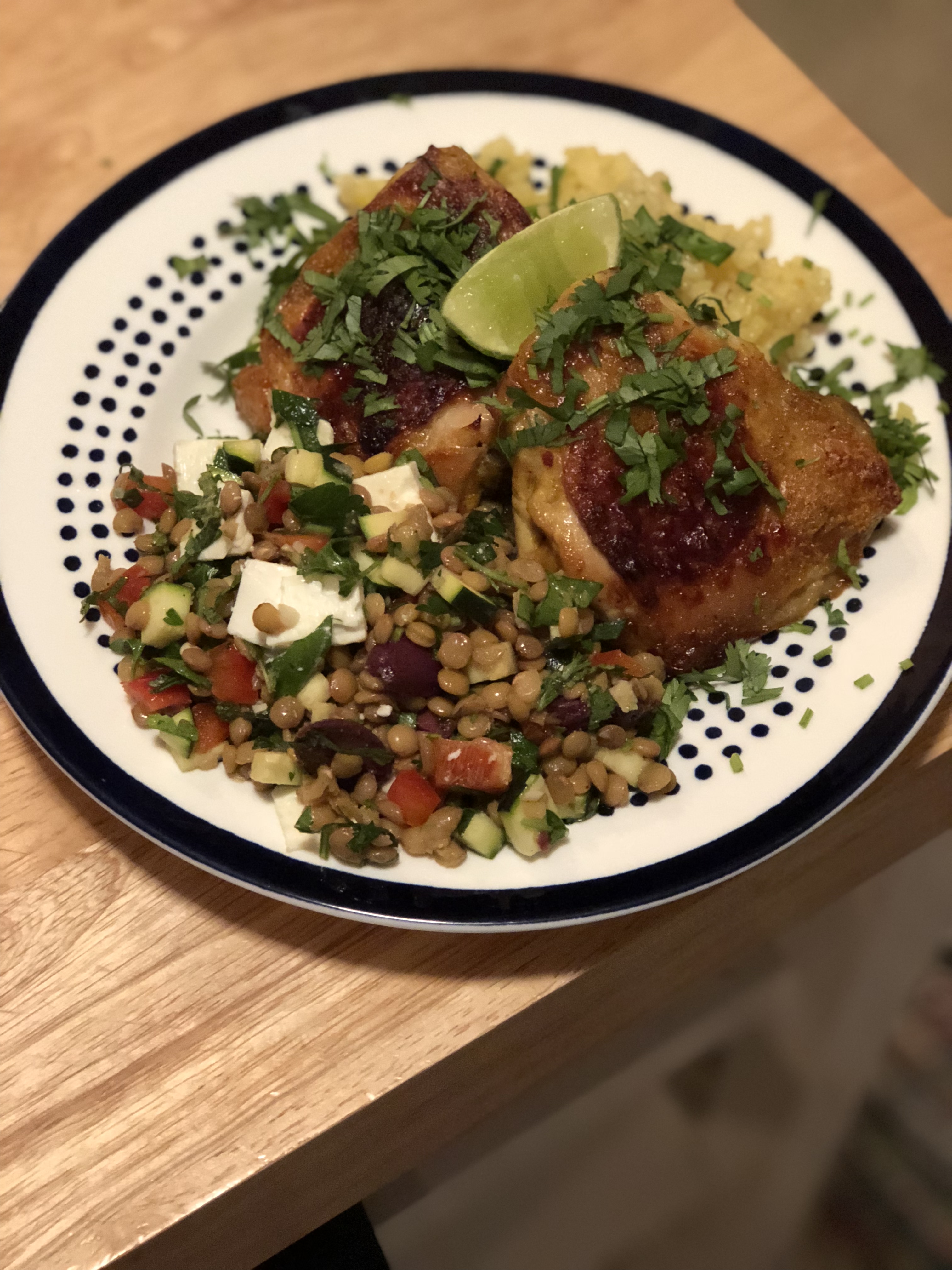
Celebration Supper: Tandoori Chicken with Saffron Rice and Lentil Salad

IMG_6346

Ever since finishing chemo, I have been enjoying cooking and eating with new intention. I will admit to a victory martini following my happy results. (I mean, come on. A girl has to celebrate.) But then I got back to work and cooked the kind of meal I have come to crave, one full of international flavors and rich in cancer-fighting ingredients. Interestingly, though not surprisingly, cancer rates are lower in countries like India and Japan and Greece, places where people are more likely to be eating traditional dishes instead of the highly processed foods that makes up much of the American diet. It makes sense to model our eating habits after those of some of the healthier parts of the world if we want to live healthier lives. Eating this way happens to taste really good, too.

Broiled Tandoori Chicken
adapted from How to Cook Everything, by Mark Bittman
serves 3-6, depending on how hungry the people you are feeding might be

I have used this marinade on various cuts of chicken, as well as on tofu. It is bright and flavorful and full of anti-inflammatory goodness. It comes together fast in a food processor or blender, but you could also mince or grate the onion, garlic, and ginger and then stir everything together by hand. You could probably substitute coconut milk for the yogurt, too, if you wanted to avoid dairy.

Ingredients:

1 cup organic yogurt, preferably grass-fed
1 small onion, peeled and cut into chunks
2 cloves garlic, peeled
1 inch-long piece of fresh ginger, peeled
2 tsp maple syrup
2 Tbsp lemon or lime juice
1 Tbsp ground cumin
1 tsp ground coriander
1 tsp ground turmeric
1/4 tsp cayenne
1 tsp sea salt
Freshly ground black pepper
6 organic bone-in, skin-on chicken thighs
Lime wedges and chopped cilantro for garnish

Add yogurt, onion, garlic, maple syrup, lemon or lime juice, cumin, coriander, turmeric, cayenne, salt, and a grind or two of black pepper to a food processor or blender. Process until smooth. Give it a taste adjust the seasoning. Put chicken in a shallow pan or a large plastic freezer bag and pour the marinade over it to coat evenly. Let the chicken marinate in the refrigerator for as long as possible, ideally for several hours or even overnight.

Set an oven rack about 6 inches from the broiler. Preheat the broiler on low (or medium if you have that setting; my oven has only high and low). Remove the chicken from the pan or bag and wipe most of the marinade off so it doesn’t burn. Place the chicken skin-side down in a cast-iron or other heavy, broiler-safe pan. When the broiler is hot, pop the chicken in the oven and broil it for 20 minutes. After 20 minutes, flip the thighs over and continue cooking until the skin is golden-brown and crispy and the juices run clear, about 12 minutes more–but keep an eye on it so it doesn’t blacken. Serve over rice, garnished with lime wedges and chopped cilantro. I especially like this over saffron rice.

Note: Like I said, you can do this with other cuts of chicken or even tofu. You will just need to adjust the cooking time. If you use a boneless cut of chicken, gently pound the meat  to uniform thickness before marinating it. With boneless pieces–or with tofu–you will also be able to shorten the marinade time to as little as 30 minutes.


Mediterranean Lentil Salad
adapted from The Cancer-Fighting Kitchen, by Rebecca Katz (Seriously…just buy this cookbook. It’s wonderful.)

I love Greek salad. This dish has all those flavors plus the protein boost from lentils. The original recipe calls for cucumber; I didn’t have one, so I used a small zucchini instead, and it worked great. You could add some diced tomato, too.

Ingredients:

1 cup dried lentils, rinsed and drained
1 clove garlic, smashed and peeled
1/2 tsp dried oregano
Sea salt
2 bay leaves
1 cinnamon stick
1/4 cup extra-virgin olive oil
Zest and juice of 1 lemon
1 tsp minced garlic
1/2 tsp ground cumin
Freshly ground pepper
1 red bell pepper, diced
1 small cucumber or zucchini, diced
1/4 cup pitted Kalamata olives, sliced
3 Tbsp chopped fresh mint
3 Tbsp chopped fresh flat-leaf parsley
Crumbled feta cheese, organic if possible, for garnish

Combine the lentils, smashed garlic, oregano, 1/2 tsp of salt, bay leaves, and cinnamon stick in a medium saucepan. Bring to a boil, then reduce the heat to medium-low, cover, and simmer for 20 minutes. Taste the lentils; if they are too al dente, simmer for an additional 5 minutes or until tender. Drain the lentils and discard the cinnamon stick and bay leaves.

In a medium bowl, make the dressing: whisk together the olive oil, lemon zest and juice, minced garlic, cumin, 1/2 tsp of salt, and a few grinds of pepper (you can do this while the lentils are cooking). Taste and adjust seasoning. Add the warm lentils to the dressing, toss to combine, and refrigerate for 20 minutes.

Take the lentils out of the refrigerator and stir in the red pepper, cucumber (or zucchini), olives, mint, and parsley. Taste and adjust seasoning. Sprinkle with crumbled feta. This salad is even better the next day.


There will be rainbows

I have been thinking a lot about hope. Hope is where I live right now, but my shelter is fragile. Fear comes calling often, and so do doubt and grief and worry and anger and pain. And there are cracks in the walls and leaks in the ceiling that I must constantly mend. Some days they are easy to patch and others, not so much. With an important post-treatment CT scan looming on my horizon, my battle between hope and fear is raging.

I have a tendency to expect the worst–or at least, to not expect the best. It is one of my most trusted defensive plays; by expecting the worst, maybe the disappointment will sting less. The problem is that I sacrifice opportunities for joy, surprise, and delight. I fail to see the power I have as the author of my own life. I get too caught up in grim possibilities to recognize what is good and wonderful right now. I am working on that.

A few weeks ago, Lucy and I were on the road to my mom’s, heading down the freeway on a typically gray February day. Eyes straight ahead, I drove on, aware of the cars around me but pretty much on autopilot, having made that same trip countless times. I was jolted out of reverie by a sudden exclamation from Lucy in the backseat.

“There’s a RAINBOW, Mommy!”

I glanced over, expecting a faint swath of color or some reflection in the window. (She has no difficulty finding wonder in the most ordinary things. She makes friends out of scraps of paper. She thinks dust motes are beautiful.) Instead, I was startled and amazed to see a perfect, full arc stretching across the sky. It was complete, vibrant from end to end, each color equally strong. It was the most beautiful rainbow I have ever seen, and I almost missed it. I’m so thankful for the eyes and heart of my brilliant daughter. I am grateful for the way she sees the world and shares the magic she finds. She teaches me to notice and appreciate life and to be excited about it. What a remarkable gift at a time like this.

I hold on to these moments, these sparks, with more care and tenderness than I used to. I am learning I can change, that maybe those fatalistic tendencies are not my true nature. I am finding that I believe in magic and miracles and signs and meaning. This cancer journey has released my spiritual world, a world that has always lived in my heart but which my rational mind has been shy, ashamed even, to embrace.

I am learning to change my perspective, to soften and bend and be vulnerable. To give way to hope, to let it fill me with light and comfort and ease. To forgive. To really love, unconditionally, and without expectation. To let go of guilt and resentment and bitterness towards myself and others. It feels good. And though I struggle every day to keep the fire going, to strengthen it, to believe in it, I am shifting toward a truer peace and happiness than I have ever felt before. The battle is raging, but hope is winning. She is stronger than fear. She can outlast.

My scan will come and go. It will be good to have it over with, no matter the results. I have found it is better to know than to sit with uncertainty in these situations. And there will be more scans and tests and anxious moments in my future. There will also be plenty of other worries and fears that are not related to my own personal health. But there will be rainbows, too, lots of them. I just need to notice.

Rainbow Soup, aka minestrone
adapted from The Cancer-Fighting Kitchen by Rebecca Katz

I acknowledge that I have been a big ball of emotions in my last few posts, but I do intend to continue sharing recipes on this blog. I have learned a lot about the power of nutrition in strengthening the immune system and supporting the body’s ability to fight cancer and recover from treatment. Rebecca Katz’s fabulous cookbook has been life changing. I hope that some of the ideas I share here will inspire or help someone else who might be going through cancer treatment–or who just wants to cook and eat healthy, delicious food.

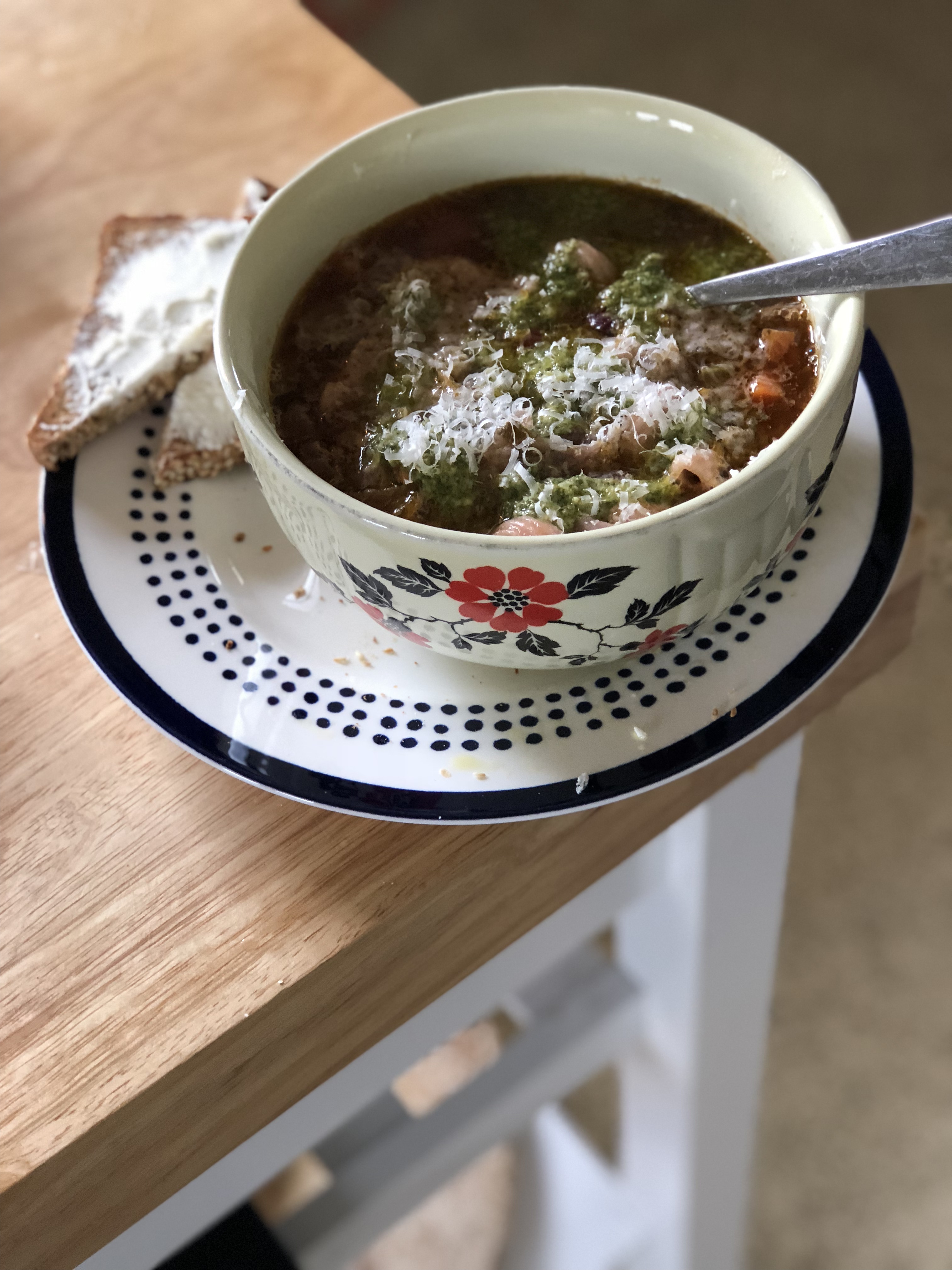
It has been very chilly in our neck of the woods lately, and I have been eating a lot of soup. This one is hearty, colorful, and full of flavor, especially when topped with basil-lemon pesto.

fullsizeoutput_122a

Serves 4-6

Ingredients:

1/2 bunch Swiss or red chard, stems and leaves separated
2 tbsp olive oil
1 medium onion, diced
Sea salt
3 carrots, peeled and diced
2 stalks celery, diced
2 small or 1 medium zucchini, diced
1 tsp (or more!) minced garlic
1/2 tsp dried oregano
1/4 tsp dried thyme
1/4 tsp fennel seeds, crushed (Use a mortar and pestle or a rolling pin.)
Pinch red pepper flakes
8 cups vegetable or chicken stock
1 14-oz can tomatoes (Use tomatoes that are already crushed or diced, or get whole tomatoes and crush or roughly chop them.)
1 15-oz can red kidney beans, drained, rinsed and tossed with a little lemon juice and sea salt
1 cup shredded purple cabbage (about 1/4 of a small head)
4 oz short pasta (elbows, ditalini, rotini, etc), cooked and drained
1/4 cup chopped fresh parsley

Instructions:

Finely chop the chard leaves AND the stems. Set each aside separately. Heat the olive oil in a large pot over medium heat. Add onions and a pinch of salt and saute, stirring occasionally, until soft and slightly golden, about 5 minutes. Add the chopped chard stems, along with the carrots, celery, and zucchini. Saute for an additional 3 minutes. Add the garlic, oregano, thyme, fennel seeds, red pepper flakes, and a large pinch of salt, and saute until fragrant, about 30 seconds to 1 minute more. Add 1/2 cup of stock and deglaze the pan, scraping up any brown bits and letting the liquid reduce by half.

Add the remaining 7 1/2 cups of stock, along with the tomatoes, beans, and cabbage. Bring the soup to a boil, then reduce the heat so it simmers gently and cook, uncovered, for 20 minutes.

Stir in the chopped chard leaves, along with another big pinch of salt. Cook for 3 minutes more or so, until the chard is slightly wilted. Add the pasta and parsley and stir. Taste, and adjust seasoning as needed.

Serve topped with Basil-Lemon Pesto (recipe follows) and grated Parmesan cheese.

Basil-Lemon Pesto
adapted from The Cancer-Fighting Kitchen by Rebecca Katz

1 cup loosely packed basil leaves
2 tbsp freshly-squeezed lemon juice
1 tsp lemon zest
1 clove garlic, crushed and peeled
1/4 cup extra-virgin olive oil
1/4 cup walnuts
1/2 tsp sea salt

Place all ingredients in a food processor and process until the walnuts are very finely chopped and everything is blended well together. Taste and add salt or lemon juice if needed.

The storm

I have been having difficulty finding the appropriate story or recipe with which to come back to this space. It feels like a major announcement, like a really big deal, to share what I want to share, and I want to do it right. But mostly I just want to do it. I want to get it out there so I can move forward. Because, you see, what I need to tell you is not exactly a good thing, at least not at first glance. It’s a really, really scary thing. And it’s hard for me to think about and I don’t want to freak you out. But I need to get beyond it. I need to heal.

So: off with the band-aid.

I have cancer. Or had cancer. I’m not sure yet if it’s gone. I hope so. I’ll know more next month. I found out about it just over a year ago, last January, a few weeks after my 37th birthday. I got thrown into the waves, bobbing, gasping, dog paddling, barely keeping my head up through eleven rounds of chemo and its myriad side effects. And then, in July, I found out I had a metastatic lesion on my right hip bone. Stage 4. I went under.

I thought my life was over. From that first moment in January when I learned that I did, in fact, have breast cancer, I prayed that it was anything but stage 4. I knew that earlier-stage disease could be treated, even cured, but that stage 4 meant chronic, terminal. No. Nonononono.

I was drowning. My doctors, my family, my beautiful little girl, my friends…they surrounded me, lifted me, pulled me back to the surface. I did some research, learned that remission was still possible. Learned that cancer statistics aren’t everything. I read that a small percentage of women with metastatic breast cancer never have a recurrence. I resolved to do everything I could to get myself into that group.

A month after I finished chemo, I had radiation to the hip lesion, followed by a double mastectomy and lymph node surgery. I had radiation treatments to my chest and armpit for 32 days in a row. I am now on hormone therapy and am also getting infusions of Herceptin every three weeks. My hair has come back with a vengeance, and my energy has returned. I have healed from my surgery and the radiation. I marvel at my body’s resilience, at strength I didn’t know I had.

Not long after learning that my cancer was stage 4, I began seeing a naturopath at the treatment center. If I’m going to stick with a nautical metaphor for this experience, she would be the one who steered my lifeboat to shore. She helped me understand that there were things I could do to affect my outcomes. She gave me real hope and practical tools. She empowered me to take back some control of my health and well-being. With her help, I have changed my diet. I practice yoga. I meditate. I see a counselor. I take supplements. I get acupuncture. I breathe. I laugh. I allow myself to be happy.

The hurricane has passed, and I am still here. And though I am not sure if I am through the storm or merely in its center, all that matters today is the blue sky and sunshine. There is so, so much to be grateful for.

I do believe I have many years ahead, and I intend to make them beautiful. I choose joy. I choose courage. I choose love.

I choose to live.

Thanks for letting me get that off my chest. See you soon. XO


Glow

On election night, I struggled to sleep. I tossed and turned in bed and was thankful when Lucy awoke at her customary 3 a.m. I changed her and nursed her and sat with her as she drifted off on my lap, cozy in a blanket and secure in my arms. I fell asleep like that, in the yellow armchair with my feet propped on a stool and my nose in her hair. I slept there, holding her, until Mike came in sometime after six, already showered and dressed, to get a sweater from the closet in her room. I didn’t want to let her go.

I had been having nightmares about Trump winning the presidency in the weeks before the election. So I wasn’t altogether surprised when it happened, but, boy, was I sad. I had hoped hard that the bad dreams wouldn’t come true, that my fears would be allayed with a sweeping victory for Hillary Clinton, a victory that would not only give us our first female president but also reassure us, resoundingly, that our country is not lost to hate, ignorance, racism, sexism, and xenophobia. I hoped hard as I waited in line to drop off our ballots. I hoped hard as I played with Lucy at the park under the warm, blue sky. I hoped hard as the results rolled in and the night stretched out, looking bleaker and bleaker. I was ready to celebrate on November 9, to be proud, as a woman with progressive ideals, as a mother to a strong-willed daughter. “That could be you, someday, my love!” is what I wanted to say to her. I wanted to be excited for the future, not scared of it.

But now I am finding it hard to look at her without feeling like I failed her by somehow allowing this ridiculous, terrifying outcome to transpire. I do not want my child to grow up in a country where hate is legitimized and bullies win, a place that is isolated from the world, a place where liberty and freedom and equality are empty promises for most, truly only intended for a privileged few. I don’t know what the next four years will hold, but I am worried. Not just because of the man in office, but because of the ugly truths of this nation that his campaign uncovered. I am worried that people will not be good to one another.

I didn’t want to leave the house yesterday. I had to, though, because we were out of diapers. At the store, I felt distant and floaty, as if I were underwater or had taken a sleeping pill. I pushed the cart slowly, feeling disconnected and yet wondering how many others around me were experiencing the same sadness, the same sense of muted rage. Back home, we went about our day. I stayed away from the news and social media.

After dinner and washing and pajamas, we went outside to say goodnight to the moon. We’ve missed it lately, either because of its newness or the weather or some unnecessary urgency. But last night the moon shone through the window and Lucy beckoned me to the front door to take her outside, into the darkness. I held her up, and she craned and reached toward that glowing rock, joyful and amazed. The world is so magical in her eyes. I need to keep that wonder alive for her as long as I can, to glow for her, reflecting her glory like the moon shines by the sun. She is my sun.

I am uncertain of the future, but what I know is that right now I need to be strong and hopeful–for my sake and for Lucy’s. I need to love her and teach her to love–and to care. We have entered into a strange time, and it is hard not to feel alone and angry and impotent. It doesn’t help, though, feeling like that. It doesn’t make it better.

So her daddy and I will teach her to love. We will teach her to be proud and to believe in herself. We will teach her to look out for those who need help. We will teach her that the world is much bigger than herself.

We will also teach her hard truths, about injustice and prejudice and power. Not to scare or embitter her, but because she needs to know. I don’t want her to be knocked down by somebody else’s blindness or bigotry; knowledge is the best armor we can give her.

Most importantly, we will teach her to see goodness in the world. In people, in nature, in art and music, in experiences: see the good. Reflect it–glow from it–so that others notice, too. Use it as a shield when the world feels menacing.

I hope that this election, which stunned so many, will ignite conversations, actions, and movements that bring healing to communities across the country. I hope that instead of further distancing and alienating ourselves from our neighbors, we seek ways to connect and to fight back, peacefully, for the good we believe in. Perhaps these connections and conversations and actions and movements and fights will be the good that comes out of this mess. We will have to wait and see.

In the meantime, I will watch the moon with Lucy.